
When I first started my career in research, I was immediately faced with a fundamental question: what’s the difference between basic vs applied research? It seemed like a simple distinction, but as I dove deeper, I realized how these two approaches shape the way we understand and interact with the world. Basic research focuses on expanding knowledge for its own sake, often without immediate practical applications, while applied research aims to solve specific, real-world problems. This distinction isn’t just academic—it influences funding decisions, career paths, and even societal impact. Understanding this difference has been crucial in my work, helping me navigate projects and communicate their value to stakeholders.
Defining Basic and Applied Research
At its core, basic research is about curiosity-driven exploration. It seeks to answer fundamental questions about how the world works, often without a clear endpoint or immediate application. Think of it as laying the groundwork for future discoveries. For example, studying the behavior of subatomic particles might not seem practical today, but it could lead to breakthroughs in technology decades from now. In my experience, basic research is where innovation begins—it’s the soil from which applied solutions eventually grow.
Applied research, on the other hand, is goal-oriented. It takes existing knowledge and applies it to solve specific problems or improve existing processes. This is the kind of research that directly impacts industries, healthcare, and daily life. For instance, developing a new vaccine or optimizing a manufacturing process falls under this category. I’ve seen how applied research can deliver tangible results quickly, but it relies heavily on the foundational knowledge built by basic research.
Key Differences: Basic Vs Applied Research
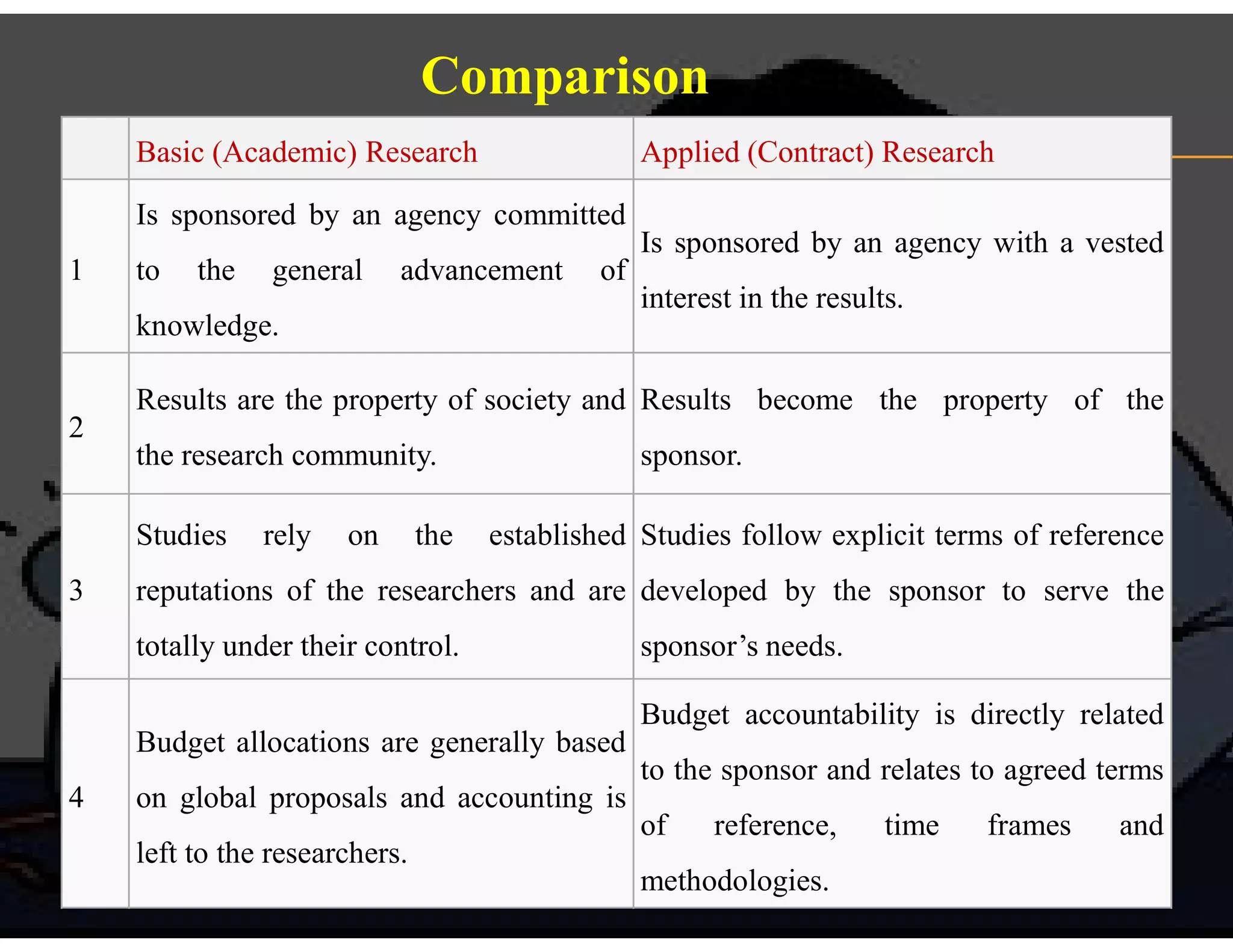
To better understand the contrast, let’s break it down into a structured comparison:
| Aspect | Basic Research | Applied Research |
|---|---|---|
| Primary Goal | Expand theoretical knowledge | Solve practical problems |
| Timeframe | Long-term, often without immediate results | Short to medium-term, focused on quick outcomes |
| Funding Sources | Government grants, academic institutions | Industry partnerships, private investments |
| Impact | Indirect, contributes to future innovations | Direct, immediate societal or economic benefits |
| Examples | Studying black holes, exploring genetic mutations | Developing renewable energy technologies, improving medical treatments |
Who Benefits from Each Approach?
The beauty of basic vs applied research lies in their complementary nature. Basic research is essential for scientists and academics who thrive on discovery and pushing the boundaries of human knowledge. It’s the realm of Nobel Prize-winning work, where theories are challenged and new paradigms emerge. However, it often requires patience and a tolerance for uncertainty.
Applied research, meanwhile, is the domain of engineers, entrepreneurs, and policymakers. It’s where ideas meet action, and results are measured in tangible improvements. I’ve worked on applied projects where the pressure to deliver was high, but the satisfaction of seeing real-world impact was immensely rewarding. That said, applied research can sometimes feel constrained by its immediate goals, leaving less room for serendipitous discoveries.
The Interdependence of Basic and Applied Research
Here’s the thing: basic and applied research aren’t mutually exclusive. In fact, they’re deeply interconnected. Many groundbreaking technologies we rely on today—like smartphones or the internet—started as basic research with no clear application. Similarly, applied research often uncovers new questions that drive further basic investigation. In my career, I’ve seen how one can inspire the other, creating a cycle of innovation.
💡 Note: It’s a common misconception that basic research is less valuable than applied research. In reality, both are essential for long-term progress. Neglecting one can stifle innovation and limit our ability to solve complex problems.
Challenges and Tradeoffs
Both approaches come with their own set of challenges. Basic research often struggles with funding, as its long-term benefits can be hard to quantify. I’ve witnessed talented researchers abandon their work due to lack of resources, which is a loss for everyone. Applied research, on the other hand, can be criticized for being too narrow or commercially driven, potentially overlooking broader implications.
Honestly, the tension between these two types of research reflects a larger debate about the role of science in society. Should we prioritize knowledge for its own sake, or focus on solving immediate problems? My take is that we need both—a balanced approach that fosters curiosity while addressing urgent needs.
In my years of working in this field, I’ve learned that the distinction between basic vs applied research isn’t always clear-cut. Many projects blend elements of both, and that’s where the most exciting work happens. Whether you’re driven by the pursuit of knowledge or the desire to make a tangible impact, understanding this dynamic can help you navigate the complex world of research more effectively.
⚠️ Note: When planning a research project, consider whether your goals align more with basic or applied research. This will influence your methodology, funding sources, and how you communicate your findings.
The next time you hear about a scientific breakthrough or a new technology, take a moment to think about the research that made it possible. Was it driven by curiosity, or was it a solution to a specific problem? Chances are, it was a bit of both. And that’s the real takeaway: basic and applied research are two sides of the same coin, each playing a vital role in advancing our understanding of the world and improving our lives.
Related Terms:
- Basic vs Applied Research psychology
- Basic vs Applied Research examples
- Basic vs Applied Research definition
- Basic vs Applied Research questions
- examples of applied research
- examples of basic research